
Description
Tochnit Aleph TA179
Edition of 250 copies
November 2026
“I have always thought that the weakness of painters of the last half-century was their tendency to limit themselves too much to a single category of space: geometry and its relationship to stillness, reducing everything to the same plane, perhaps due to a disillusioned vision resulting from a lack of projection. Thus, even when nothing is lacking in a painting, succession, time, continuity, and memory are no longer perceived; for the habit of sight, by the very nature of the eye, weakens memory. How then to represent differently, in order to move from the domination of the eye, physical sight, to the sight of the mind? Only through a complex system of representation, at once spiritual, theatrical, and perspectival. It was 1981, and I needed to find a method that would exacerbate the idea of representation, both for image and for speech and sound.
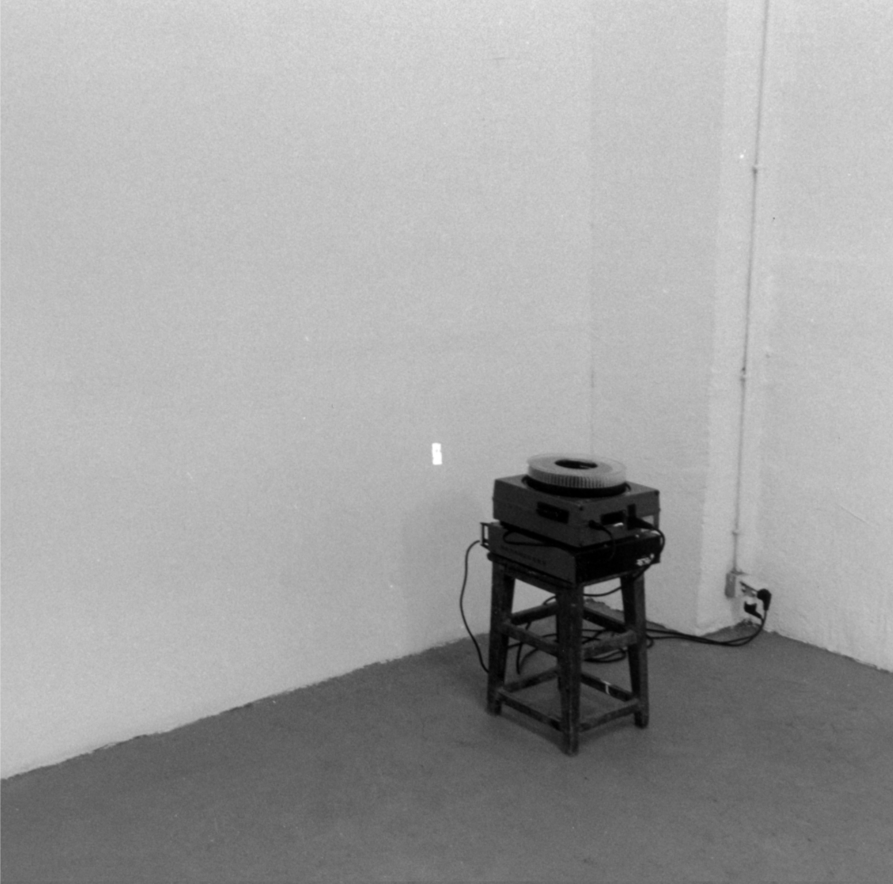
I immediately envisioned an anachronistic audiovisual setup consisting of a slide projector and a sound player, placed on a stool, the whole thing highly visible, projecting a very small image (as small as the one drawn). But first and foremost, the projected image would come from a drawing, neither spontaneous nor invented, but copied from a magazine, some other document, or even from my own photographs (…) The sound, for its part, following the principle stated above, will come from recordings taken or copied from various media: radio, television, film, or from recordings made by me; then edited, layered, etc.
This “Audio-visual device” with its equipment, deliberately full of archaism (like the hyphen deliberately placed between audio and visual, which while connecting puts a distance), thus became contemporary in reverse, because we were in the midst of the blossoming of new audiovisual technologies.” – excerpt from the liner notes by Gérard Collin-Thiébaut.


