Description
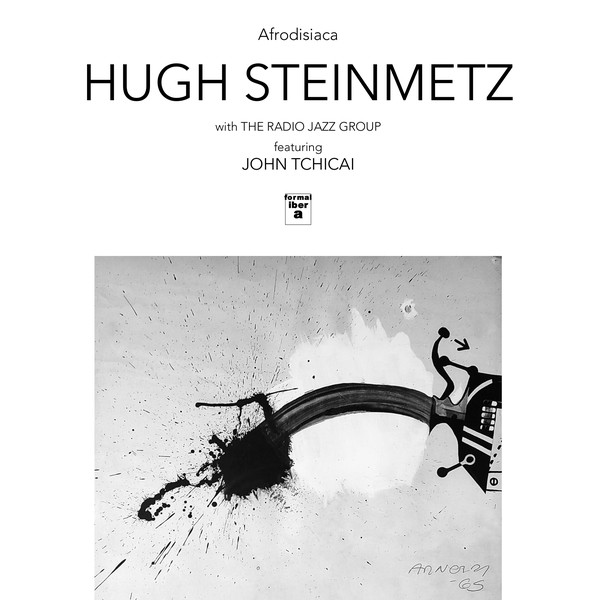
Forma Libera / Alga Marghen, Italy 2026
Notes by Mats Gustafsson:
“So… Steinmetz. Hugh Steinmetz. A Danish trumpet player my mentor Peter Brötzmann always talked highly about. “Aaaaah jaaaaa – those crazy Danes!”. A sentence in strong German English, delivered frequently by Peter, with a huge characteristic laughter and sparkling eyes with a cigar in mouth. Steinmetz was one of very few Scandinavian musicians who actually travelled south and collaborated with European musicians in the late 60s. To interact with other musicians is KEY. The Danes did it. Early on. They went there. As creative magnets looking for artists to share the moment with. In my world. He is a legend. And a key to understand the early developments of free jazz. The possibilities given to Steinmetz by the leader of the Danish Radio Jazz Group, Erik Moseholm, created chances to explore and to experiment. In a studio situation with a large hand-picked band and time to rehearse. Ideas and perspectives grabbing the moment. Presented on this vinyl are different occasions where Steinmetz was working with The Danish Radio Jazz Group in various settings and situations. Different ideas tried out and realized with endless support of Moseholm. Radical jazz music in large settings. Those times were WILD! Steinmetz was given the chance. And he used it. The collection of pieces presented on this album makes my jaw fall into my lap. Makes me breathe without lungs. Makes me sweat.
AFRODISIACA
This is fresh. And radical. Like very few other things I heard. Explorations and research. Re-search. Explo-rations. Confrontational esthetics and surveying the possibilities. Aaaaaargh – I love this! There are elements of Xenakis, Penderecki and Stockhausen`s large orchestral experimentations here. As well as traces of Gil Evans, George Russell and others. You can make all kinds of associations here actually. But it all boils down to originality! Explorations and research.
One of my all-time favorite artists is John Tchicai. When he enters on top of the swarming flutes my emotional hard-drive explodes. This is so beautiful. His tone. His capability of creating strong melodic statements in any situation is a lesson and statement we need to pay attention to. The whole A-side of Afrodisiaca kills me. Takes me back to my roots and more. Old roots. New roots. Roots. When the saw of Niels Harrit enters, I start laughing loudly. Hilarious and just monumentally GREAT!
The whole composition is full of twisted changes and surprising moments where elements from ALL OVER are present! Andersens riffing underneath the saw and horn injections just make so much sense. Why? Just listen, baby!
Hilarious is the word! Whatever you do, don’t miss the extreme sax actions towards the end by Harrit and later on Brüel. Hilarious is the word!
OPUS STATIUM
Are you kidding me??? This music is thrown in my face with lightning speed and urge. What is going on here? What did they eat for breakfast? Tape manipulations. Repetitive minimalistic ostinatos. Brutal fadings. Extreme tape speedings. Pannings. This shit is so radical. Again – play me anything recent that has this radical approach and surprising turn of events – and the crate of Landlord is yours. When sweat is covering my whole back and moving downwards to my legs… Tchicai enters. And the world looks different. Again. Reference points are totally of no importance. This is just radical. Then and now. And then suddenly… the tenor sax master Bernt Rosengren is playing a hymn (!) and eyes and heart are getting wet…
BASIS FOR IMPROVISED SAW
I have been waiting to hear this music. My whole life? Ever since I heard and played with maestro Paul Lovens back in the early 90s. The singing saw is something peculiar. Indeed. The connection between improvised music and the singing saw is a very interesting one and crucial to the development of free improvised music. When John Stevens first heard Niels Harrit with TCJQ in Copenhagen in the early 60s he flipped out. A reveleation of possibilities. Disconnected connections. Stevens was in Denmark for a theatre project and heard Harrit exploring the saw. After returning to UK he slowly left the traditional rules of jazz making and started working in a more collective form where sharing and interaction were all! Free improvised communal music. Hearing how Steinmetz is setting up the structure for Harrit makes me smile again. This is essential, folks. This is an essential key to it all!
NEXT GENERATION
Hold on to your turntables. As a finale… This piece blows me totally away. A graphic score, intuitive conductions and solo playing by Steinmetz himself. HOLY SHIT!
Sorry about the language here. But this music is freakin spectacular. 1965!!! You dig? I heard similar stuff done recently… but not 60 years ago! What is it with the Danes?
The pointillistic, of almost hoquetus level, playing of the ensemble slowly getting picked up by the guitar is sensational. And creates a music that did not really appear until years later.
So, yeah —- I am sitting here with a couple crates of Landlord. But i have a feeling i will drink it all by myself. But nothing would make me happier than sharing it with maestro Hugh Steinmetz. Skål!